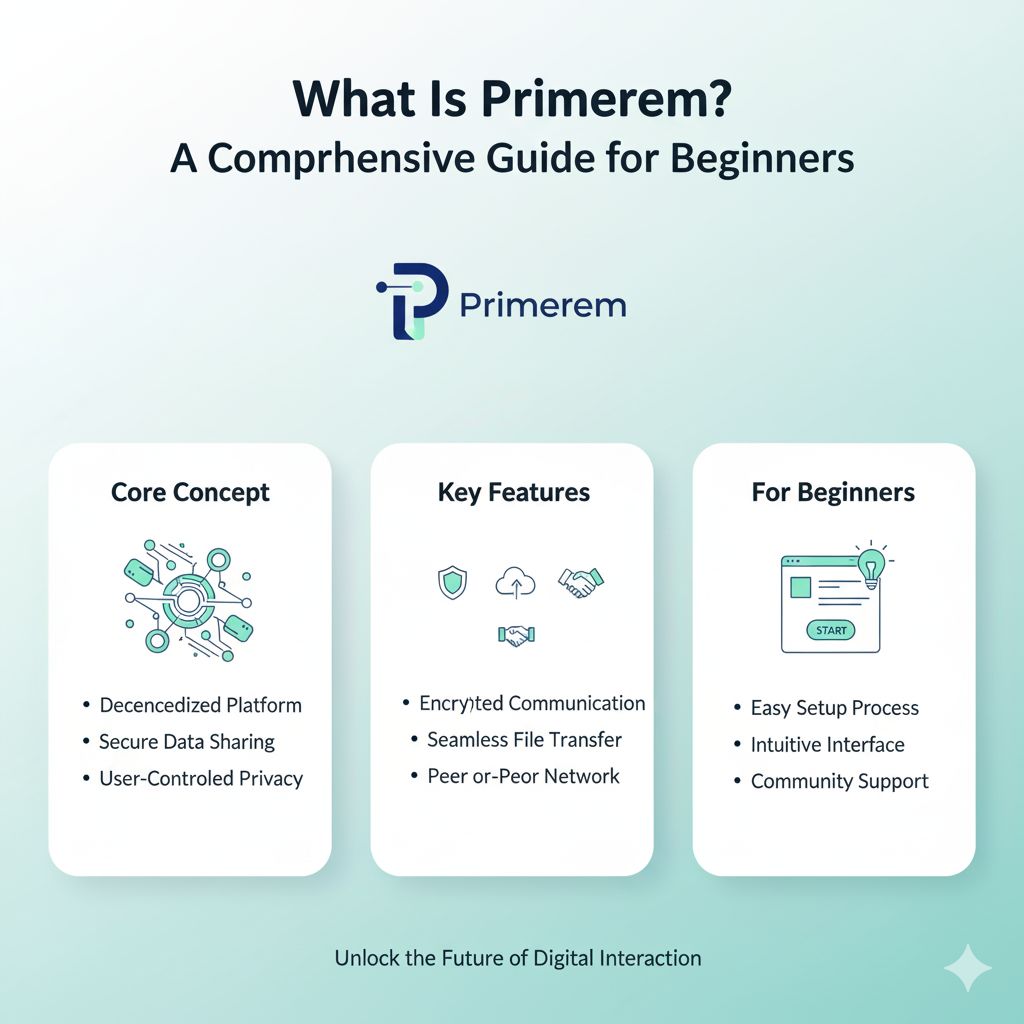
What Is Primerem? A Comprehensive Guide for Beginners

0
A conceptual image representing the core function of primerem, such as interconnected digital nodes or a streamlined process diagram.

Have you ever come across a term that seems to be everywhere but remains just a bit mysterious? For many, primerem is one of those words. It sounds important, and it is, but understanding what it truly means and how it works can feel like a puzzle. This guide is here to put all the pieces together for you. We will explore what Primerem is, how it’s used across different sectors, and why it’s becoming an essential tool for professionals. Think of this as your friendly introduction to a concept that is shaping how industries approach complex challenges. We will break down the technical details into simple, easy-to-understand language so you can see its practical value. By the end, you’ll not only grasp the concept but also appreciate its potential to streamline operations and drive innovation.

Key Takeaways

  • Core Definition: Primerem is a foundational framework or system designed to streamline and optimize complex processes, often involving data management and workflow automation.
  • Key Benefits: The main advantages of using a primerem system include increased efficiency, improved accuracy by reducing human error, enhanced scalability for growing operations, and better data security.
  • Versatile Applications: It is not limited to one industry. Primerem finds applications in finance, healthcare, logistics, and technology, adapting to the specific needs of each sector.
  • Implementation Steps: Successfully adopting a primerem solution involves careful planning, selecting the right platform, training your team, and continuously monitoring its performance.
  • Future Outlook: The future of primerem points towards greater integration with AI and machine learning, leading to more predictive and autonomous systems that can anticipate needs and solve problems proactively.

What Exactly Is Primerem?

At its core, Primerem is a systematic approach or platform designed to create a foundational layer for complex operations. Think of it as the prepared surface before a painter begins a masterpiece. Without that smooth, primed canvas, the final artwork might have flaws. Similarly, Primerem provides a stable and optimized base for business processes, data management, and system integrations. It isn’t a single piece of software but rather a methodology or framework that ensures all subsequent actions are more efficient, reliable, and scalable. Its primary goal is to standardize initial procedures, removing inconsistencies and creating a predictable environment where tasks can be executed flawlessly. This foundational work is crucial for any organization looking to grow without being hindered by operational bottlenecks or data chaos. By establishing this solid groundwork, companies can build more sophisticated and robust systems on top of it.

The History and Evolution of Primerem

The concept behind Primerem didn’t appear overnight. Its roots can be traced back to early principles of process optimization and workflow management. Initially, these ideas were manual and specific to manufacturing, focusing on assembly lines and reducing wasted effort. As technology evolved, so did the application of these principles. The advent of mainframe computing allowed for the first automated, large-scale data processing systems, which were early, rudimentary forms of what we now call a primerem framework.

The fundamental shift came with the rise of enterprise resource planning (ERP) systems and relational databases. These technologies provided the tools to create more integrated and comprehensive foundational systems. The goal expanded from simply managing one process to creating a unified structure for an entire organization’s data and operations. Today, with cloud computing and AI, the evolution continues. Modern primerem solutions are more dynamic, intelligent, and accessible than ever, capable of handling vast amounts of data in real-time and adapting to changing business needs with incredible agility.

Why Is Primerem Important for Modern Businesses?

In today’s competitive landscape, efficiency and accuracy are not just advantages; they are necessities. This is where primerem becomes critically important. Businesses are constantly dealing with an overwhelming amount of data and a multitude of interconnected processes. Without a solid foundation, this complexity can lead to costly errors, wasted time, and missed opportunities. A well-implemented primerem system addresses these challenges head-on by creating order out of chaos.

It standardizes workflows, ensuring that tasks are performed consistently and correctly every time. This significantly reduces the risk of human error and improves overall quality. Furthermore, it provides a single source of truth for data, which is vital for accurate reporting and strategic decision-making. As a recent article on the FintechZoomiom.com Blog noted, having a reliable data infrastructure is a key differentiator for successful companies. By automating repetitive setup tasks, Primerem frees up valuable human resources to focus on more strategic initiatives, like innovation and customer service. It essentially builds the strong operational backbone a business needs to support growth and adapt to market changes effectively.

Key Benefits of Implementing a Primerem System

Adopting a primerem framework offers a host of tangible benefits that can transform how an organization operates. These advantages go beyond simple efficiency gains and contribute to long-term health and scalability.

  • Increased Efficiency: By automating and standardizing foundational processes, Primerem dramatically reduces the time and effort required to complete tasks. This leads to faster turnaround times and higher productivity across the board.
  • Enhanced Accuracy: Manual data entry and process management are prone to human error. Primerem minimizes these risks by creating automated, repeatable workflows, ensuring data integrity and consistent outcomes.
  • Improved Scalability: As a business grows, its processes can become unwieldy. A primerem system is designed to scale, handling increased volume and complexity without a drop in performance. This allows companies to expand confidently.
  • Better Resource Allocation: When routine tasks are automated, employees are free to concentrate on higher-value activities that require critical thinking, creativity, and strategic planning.
  • Centralized Data Management: It provides a unified platform for managing essential data, breaking down silos between departments, and ensuring everyone is working from the same information.
  • Enhanced Security: Centralizing and standardizing processes makes it easier to implement and monitor security protocols, protecting sensitive data from unauthorized access and breaches.

Understanding the Core Components

A robust primerem solution is typically built from several interconnected components, each serving a specific function. Understanding these parts helps clarify how the entire system works together to create an optimized foundation.

Data Ingestion and Validation

This is the entry point. The data ingestion component is responsible for collecting data from various sources, such as databases, APIs, or user inputs. Once collected, the data goes through a rigorous validation process. This step is crucial for ensuring accuracy and consistency from the very beginning. It checks for proper formatting, completeness, and adherence to predefined business rules, rejecting or flagging any data that doesn’t meet the criteria.

Process Automation Engine

The process automation engine is the heart of the Primerem system. It takes the validated data and executes a series of predefined workflows and tasks. This engine is highly configurable, allowing organizations to model their unique business processes. It handles the repetitive, rule-based steps that were previously done manually, such as routing information, triggering notifications, or updating records in other systems. This automation ensures that processes run smoothly and without manual intervention.

Integration Layer

Modern businesses rely on a wide array of software and tools. The integration layer acts as the universal translator, enabling the primerem system to communicate seamlessly with other applications. Whether it’s connecting to a CRM, an accounting software, or a proprietary database, this component ensures that data can flow freely and securely between systems. This prevents data silos and creates a truly unified operational environment.

Primerem vs. Traditional Methods: A Comparison

To fully appreciate the value of a primerem approach, it’s helpful to compare it with traditional, often manual, methods of process management.

Feature

Primerem System

Traditional Methods

Data Handling

Automated ingestion and validation. Centralized.

Manual data entry. Data is often siloed in spreadsheets.

Process Execution

Automated, consistent workflows.

Manual, variable processes are dependent on individuals.

Error Rate

Very low, as human error is minimized.

High, prone to typos, omissions, and inconsistencies.

Scalability

High. Designed to handle growth easily.

Low. Becomes inefficient and chaotic as volume increases.

Reporting

Real-time, accurate data for instant insights.

The process is time-consuming and often based on outdated information.

Adaptability

Flexible and easy to update as needs change.

Rigid and difficult to modify without disrupting operations.

Everyday Use Cases Across Industries

The flexibility of the primerem framework allows it to be adapted for a wide range of applications in various sectors. Its ability to bring order and efficiency to complex foundational tasks makes it a valuable asset for almost any industry that deals with data and structured processes.

Finance and Banking

In the financial sector, accuracy and compliance are paramount. Primerem systems are used to automate customer onboarding, validate application data, and manage loan origination processes. By standardizing these initial steps, banks and financial institutions can reduce risk, ensure regulatory compliance, and significantly speed up customer service.

Healthcare

Healthcare organizations handle vast amounts of sensitive patient data. A primerem approach is used to streamline patient intake, manage electronic health records (EHR), and automate billing and coding processes. This not only improves administrative efficiency but also enhances patient data security and reduces the chance of critical errors in medical records.

Logistics and Supply Chain

The logistics industry is a complex web of moving parts. Primerem frameworks help manage inventory, automate order processing, and track shipments from origin to destination. By creating a reliable data foundation, companies can optimize routes, predict demand more accurately, and provide customers with real-time tracking information, improving overall supply chain visibility and performance.

Technology and SaaS

For technology companies, especially Software-as-a-Service (SaaS) providers, a primerem system is essential for managing user provisioning and subscription billing. It automates the setup of new accounts, ensures accurate billing cycles, and handles upgrades or downgrades seamlessly. This allows SaaS companies to scale their user base rapidly without being bogged down by manual administrative tasks.

How to Choose the Right Primerem Solution

Selecting the right primerem solution is a critical decision that requires careful consideration of your organization’s specific needs. The first step is to conduct a thorough analysis of your existing workflows. Identify the pain points, bottlenecks, and areas most prone to error. This assessment will give you a clear picture of what you need the system to accomplish.

Next, evaluate potential vendors or platforms based on their features, scalability, and integration capabilities. Does the solution offer the flexibility to adapt to your unique processes? Can it connect with the other software tools your team already uses? It’s also important to consider the user interface. A system that is intuitive and easy to use will have a much higher adoption rate among your team. Finally, look at the vendor’s support and training options. A strong partnership with your provider is key to a successful long-term implementation of your primerem strategy.

The Future of Primerem: Trends to Watch

The field of primerem is continuously evolving, driven by advancements in technology. The most significant trend is the increasing integration of Artificial Intelligence (AI) and Machine Learning (ML). Future primerem systems will not just automate predefined rules; they will learn from data to predict outcomes, identify potential issues before they occur, and suggest process improvements. This move towards intelligent process automation will make systems more proactive and autonomous.

Another key trend is the rise of low-code and no-code platforms. These will empower non-technical users to build and modify their own primerem workflows, increasing agility and reducing reliance on IT departments. We can also expect to see deeper and more seamless integrations with a broader range of applications, creating a truly connected enterprise. As businesses continue to digitize, the role of a sophisticated primerem foundation will only become more central to achieving operational excellence.

Conclusion

Understanding and implementing a primerem framework is no longer a luxury for large corporations; it is a strategic necessity for any organization looking to thrive in a complex, data-driven world. By standardizing foundational processes, automating repetitive tasks, and ensuring data integrity from the start, a primerem system paves the way for greater efficiency, accuracy, and scalability. It moves businesses away from fragile, manual methods and towards a robust, automated operational core. This allows teams to focus their energy on what truly matters: innovation, growth, and delivering exceptional value to customers. As you consider the next steps for your organization, evaluating how a primerem approach can strengthen your foundation is a worthwhile and critical exercise.

FAQ

Q1: Is Primerem a specific software or a general concept?
A1: Primerem is best understood as a concept or a framework rather than a single piece of software. It represents a systematic approach to preparing and optimizing the foundational layer of business processes. While many software solutions can help you implement a primerem strategy, the term itself refers to the methodology.

Q2: Can a small business benefit from a primerem system?
A2: Absolutely. While often associated with large enterprises, the principles of primerem are scalable. Small businesses can benefit significantly from the increased efficiency and reduced error rates. Many modern solutions are cloud-based and affordable, making them accessible for companies of all sizes to automate and standardize their core operations.

Q3: How long does it take to implement a Primerem solution?
A3: The implementation timeline can vary widely depending on the complexity of your processes and the solution you choose. A simple implementation for a specific department might take a few weeks, while a company-wide rollout could take several months. A phased approach, starting with one critical process, is often recommended.

Q4: Is Primerem difficult to maintain?
A4: Once correctly set up, a sound perimeter system should require minimal maintenance for day-to-day operations, as it is largely automated. Maintenance typically involves monitoring performance, making adjustments to workflows as business needs change, and applying software updates from the provider. Choosing a user-friendly platform can significantly simplify this process.


What Is Soutaipasu? A Simple Guide to Relative Paths

0
A diagram showing the difference between a relative path and an absolute path in a computer file system.

Have you ever tried to find a specific file on your computer and ended up clicking through endless folders? It can be frustrating, especially when you know the file is somewhere nearby. In the world of computers and software, there’s a clever concept that helps programs navigate these digital mazes efficiently. This concept is known as soutaipasu, or relative path. Understanding how it works can make it easier to grasp how software and websites find the files they need to function correctly. This guide will walk you through what a relative path is, why it’s so important, and how it compares to its counterpart, the absolute path. We’ll explore its uses in web development, programming, and everyday file management.

Key Takeaways

  • What is Soutaipasu? It is the Japanese term for a relative path, which defines a file or folder location starting from the current directory, not from the root directory.
  • Relative vs. Absolute Paths: Relative paths are short and portable, while absolute paths are long, specific, and start from the system’s root (like C:\ on Windows.
  • Why It Matters: Using a relative path makes software, websites, and projects portable. You can move the entire project folder without breaking the internal links between files.
  • Common Uses: It is fundamental in web development for linking CSS, JavaScript, and images. It’s also crucial in programming for accessing resource files and modules.
  • Simple Syntax: Special characters like . (current directory) and .. (parent directory) are used to navigate the file structure.

Understanding the Core Concept of Soutaipasu

At its heart, soutaipasu is about context. Imagine giving someone directions to a coffee shop. If you’re both standing in front of a library, you might say, “It’s next door to the right.” That’s a relative direction. It only makes sense from your current location. This is precisely how a relative path works in a computer’s file system. It instructs the computer on how to locate a file from the current folder. It doesn’t provide the full, long address from the very beginning of your computer’s hard drive. Instead, it uses a shorter, more direct route based on the current context, making it a flexible and efficient way to link files together within a project. This method is essential for creating projects that can be easily moved or shared without disrupting internal connections.

What Is a Path in Computing?

Before we dive deeper, let’s clarify what a “path” is. In computing, a path is a string of characters that specifies the unique location of a file or directory in a file system. It’s like a postal address for a file. Every file on your computer has a unique path that allows the operating system to find and access it. Without paths, your computer would be a chaotic, unorganized collection of data with no way to locate anything specific. Paths are the backbone of file organization, guiding software and users to the exact resources they need, whether it’s an image for a website, a document you saved yesterday, or a critical system file that your computer needs to operate.

Absolute Path: The Full Address

To truly appreciate the relative path, we must first understand its counterpart: the absolute path. An absolute path provides the complete, unabridged address of a file, starting from the very top of the file system, known as the root directory.

  • On a Windows system, an absolute path typically starts with a drive letter, like C:\Users\YourName\Documents\report.docx.
  • On macOS or Linux, it starts from the root directory, represented by a forward slash, like /home/YourName/documents/report.docx.

An absolute path is unambiguous. No matter where you are in the file system, that path will always point to the same file. However, this rigidity is also its biggest weakness. If you move your project folder to a different computer or a new location on your own drive, all the absolute paths will break because the starting point (like the username or drive letter) might have changed.

Relative Path vs. Absolute Path: A Comparison

Choosing between a relative and an absolute path depends entirely on your goal. One is built for portability, while the other offers unchanging precision. Understanding their key differences is crucial for any developer or system administrator.

Here is a table comparing their main characteristics:

Feature

Soutaipasu (Relative Path)

Absolute Path

Starting Point

Current directory

Root directory (e.g., C:\ or /)

Length

Generally more concise

Longer and more detailed

Portability

High; project folders can be moved easily

Low; breaks if project location changes

Use Case

Linking files within a project (websites, software)

Linking to external files or system resources

Example

images/logo.png or ../css/style.css

C:\Projects\Website\images\logo.png

The primary advantage of using a soutaipasu is portability. When you are building a website, for example, you link to your CSS files, images, and other pages using relative paths. This allows you to upload the entire website folder to a web server, and all the links will continue to work perfectly because their relative positions haven’t changed.

How to Use Soutaipasu: Syntax and Examples

Using a relative path involves a few special characters that act as navigational commands. These symbols are simple but powerful tools for moving through your project’s directory structure. The two most important symbols are the single dot (.) and the double dot (..).

The Single Dot (.)

The single dot represents the current directory. For instance, if you want to link to a file named contact.html That is in the same folder as your current file, the path would be:

./contact.html

Technically, you can often omit the ./, as most systems assume you are starting from the current directory if no other indicator is present. However, including it can make your code more straightforward.

The Double Dot (..)

The double dot is used to move up one directory (to the parent folder). This is extremely useful. Let’s say you are working on a file located at project/pages/about.html, and you need to access an image at project/images/profile.jpg. From about.htmlYou would need to go up one level to the project folder and then down into the images folder. The relative path would look like this:

../images/profile.jpg

This path tells the system: “Go up one folder from where I am, then look for a images folder, and inside that, find profile.jpg.”

Practical Applications in Web Development

Web development is arguably the most common and vital field where soutaipasu is used. Every website is a collection of interconnected files: HTML pages, CSS stylesheets, JavaScript files, images, videos, and fonts. For the website to display correctly, the HTML code must be able to locate and load all these resources. Using relative paths ensures that the website works both on a developer’s local machine and on the live web server, regardless of the domain name or folder structure on the server. For instance, a recent article on the fintechzoomiom.com Blog highlights how modern web frameworks rely heavily on structured file paths for modular development.

Linking CSS and JavaScript

A typical website structure might look like this:

  • index.html
  • css/style.css
  • js/main.js

From the index.html File, you would link the CSS and JavaScript files using the following relative paths in your HTML head and body tags:

<link rel="stylesheet" href="css/style.css">
<script src="js/main.js"></script>

These paths instruct the browser to look for a css folder and a js folder within the same directory as index.html.

Displaying Images

Similarly, if you have a images folder and want to display a logo on your homepage, the HTML would be:

<img src="images/logo.png" alt="Company Logo">

This simple, portable link works no matter where the website folder is located. If you had used an absolute pathC:\MyWebsite\images\logo.png, the image would fail to load as soon as you uploaded the site to a web server.

The Role of Relative Paths in Programming

Beyond the web, the concept of soutaipasu is fundamental in software development. When programmers write code, they often need to include libraries, access configuration files, or load resources like icons and sound files. Hardcoding absolute paths would make the application incredibly brittle. A user might install the program in a different directory, or the developer might move the project, causing the program to crash because it can’t find its own files. Using relative paths solves this problem by ensuring the application can always locate its resources in relation to its own execution file. This makes software distributable and reliable across different machines and operating systems.

Potential Pitfalls and Best Practices

While incredibly useful, relative paths can sometimes confuse if not managed carefully. A common issue is the “spaghetti path,” where you see long chains of ../../.., making it hard to follow the logic.

Here are a few best practices to keep in mind:

  • Maintain a Clean Folder Structure: A well-organized project with logical folders for assets (images, css), source code (src), and documents (docs) makes pathing much easier.
  • Use a Root-Relative Path: An alternative is the root-relative path, which starts with a /. This path is relative to the project’s root folder. For example, it /css/style.css will always look for the css folder in the top-level directory of the site. This can prevent deep nesting issues with ...
  • Be Mindful of Your Current Location: Always remember which file you are writing the path from. The same resource will have a different relative path depending on your starting point.

Conclusion

Understanding soutaipasu, or the relative path, is a fundamental skill in the digital world. It’s the invisible yet essential glue that holds projects together, from the simplest website to the most complex software application. By defining file locations based on their relationship to the current file, relative paths provide the portability and flexibility needed for modern development. While absolute paths offer precision, their rigidity makes them unsuitable for projects that need to be moved or shared. By mastering the simple syntax of relative paths and organizing your projects logically, you can create robust, reliable systems that function seamlessly across any environment.

FAQ

Q1: What is the main difference between a relative path (soutaipasu) and an absolute path?
A: A soutaipasu (relative path) specifies a location starting from your current directory, making it short and portable. An absolute path specifies an area starting from the system’s root directory (e.g., C:\), making it long and fixed.

Q2: When should I use a relative path?
A: You should always use relative paths when linking to files within the same project, such as on a website or in a software application. This ensures your project remains portable and won’t break if you move it to a new location or server.

Q3: Can a relative path become too complicated?
A: Yes, if your folder structure is very deep or disorganized, you might end up with confusing paths like ../../../assets/images/icon.png. To avoid this, try to maintain a clean and logical project structure. Using root-relative paths (starting with /) can also help simplify links in larger projects.

Q4: Does “soutaipasu” work on all operating systems?
A: Yes, the concept of a relative path is universal and works on Windows, macOS, and Linux. However, the directory separator character is different: Windows uses a backslash (\), while macOS and Linux use a forward slash (/). For web development, the forward slash is the standard and should always be used.

Q5: What does ../ mean in a path?
A: The ../ Syntax is used in a relative path to navigate up one level in the directory structure. It essentially means “go to the parent folder.” You can chain them together (e.g., ../../) to move up multiple levels.

UK Tax Filing Guide for Small Business

0
UK tax filing guide for small business

Filing taxes might feel overwhelming, but with the right knowledge, it becomes manageable. Whether you’re running a one-person consultancy, a growing online store, or a local service-based business, understanding your tax responsibilities is essential. This UK tax filing guide for small business owners outlines everything you need to know—from registration and deadlines to allowable expenses and digital filing rules.

If you’re new to self-employment or managing a limited company for the first time, this guide will help you stay compliant with HMRC, avoid penalties, and keep your finances in check.

Why Small Business Tax Filing Matters

Tax filing isn’t just a legal requirement—it’s part of running a professional business. Staying on top of taxes helps you:

  • Avoid HMRC penalties

  • Track business performance

  • Claim back allowable expenses

  • Stay eligible for credit, funding, or mortgage applications

Neglecting your obligations can lead to late filing fees, interest charges, and potential audits.

Registering with HMRC

Before anything else, you must register your business with HMRC. How you register depends on your business structure:

  • Sole Trader: Register for self-assessment via HMRC

  • Limited Company: Register with Companies House and HMRC for Corporation Tax

  • Partnership: Register both the partnership and each partner for self-assessment

Deadlines for Registration:

  • You must register by 5 October in your business’s second tax year (for sole traders).

  • Corporation Tax registration is due within 3 months of starting trade.

Key Tax Types for UK Businesses

Tax Type Who Pays It Collected By Filing Frequency
Income Tax Sole traders, partnerships HMRC Annually via Self Assessment
Corporation Tax Limited companies HMRC Annually via CT600 return
VAT Businesses over £90,000/year HMRC Quarterly (usually)
PAYE (Income Tax + NI) Employers HMRC Monthly
Class 2 & 4 NICs Self-employed HMRC Annually (Class 4) & via Self Assessment

Missing a deadline can lead to costly penalties. Here are key dates to remember:

Deadline Purpose
5 October Register as self-employed (2nd tax year)
31 January (annually) Online self-assessment tax return deadline
31 January (annually) Balancing payment for the prior tax year
31 July (annually) 2nd payment on account (if applicable)
9 months after year-end Corporation Tax payment due
12 months after year-end CT600 (Company Tax Return) due
VAT returns Usually, every quarter (based on the VAT period)

HMRC’s Making Tax Digital (MTD) initiative aims to modernise tax filing.

Requirements:

  • VAT-registered businesses must use MTD-compatible software to submit VAT returns.

  • Self-employed and landlords with income over £50,000 will follow from April 2026.

Recommended Tools:

  • FreeAgent (free for NatWest and Mettle users)

  • QuickBooks

  • Xero

  • Sage Business Cloud

Visit gov.uk for updates.

Allowable Business Expenses

Deducting legitimate business costs reduces your taxable profit.

Common Allowable Expenses:

  • Rent for business premises

  • Utility bills (portion for home office)

  • Software and subscriptions

  • Equipment and tools

  • Travel and mileage

  • Marketing and website hosting

  • Professional fees (accountants, consultants)

Note: Keep receipts and invoices for at least 6 years for HMRC inspections.

Corporation Tax vs Income Tax

Sole Traders & Partnerships:

  • Pay Income Tax on profits

  • Use the Self-Assessment system

Limited Companies:

  • Pay Corporation Tax (currently 19%-25% depending on profits)

  • Directors also pay Income Tax and National Insurance on salaries and dividends

Entity Type Tax Responsibility
Sole Trader Income Tax + NICs
Limited Company Corporation Tax + Director/Employee PAYE
Partnership Income Tax on partner’s profit share

Compulsory VAT Registration

You must register for VAT if your turnover exceeds £90,000 in any 12 months.

Voluntary Registration

You can register early if you want to:

  • Reclaim VAT on purchases

  • Appear more established

VAT Rates

Type Rate
Standard Rate 20%
Reduced Rate 5%
Zero Rate 0%

Payroll, PAYE and NI Contributions

If you employ staff (including yourself as a director), you must operate PAYE.

Responsibilities:

  • Deduct and report Income Tax and NI

  • Provide payslips and P60 forms

  • Submit monthly RTI (Real Time Information) to HMRC

  • Pay employer NICs and pension contributions

Software like BrightPay, QuickBooks Payroll, or Xero Payroll can help automate the process.

Penalties and How to Avoid Them

Missed Obligation Penalty
Late Self-Assessment £100 + daily penalties
Missed VAT Deadline Percentage-based fine
Corporation Tax not filed on time £100–£1,000+
Incorrect returns Up to 100% of unpaid tax

How to Stay Compliant

  • Set calendar reminders

  • Use accounting software with deadline alerts

  • Keep digital records

  • Hire a qualified accountant if needed

Action Steps for Staying Organised

  1. Register early with HMRC or Companies House

  2. Set up a digital filing system

  3. Track income and expenses weekly

  4. Use accounting tools or hire support

  5. File ahead of deadlines

  6. Bookmark trusted resources like gov.uk and derektime.co.uk

Frequently Asked Questions

1. Do I need an accountant to file taxes in the UK?

No, but it’s recommended if your finances are complex or you run a limited company.

2. What is the current Corporation Tax rate?

As of 2025, it ranges from 19% to 25%, depending on profits.

3. What happens if I miss a tax deadline?

HMRC charges penalties and interest. File as soon as possible and contact HMRC if you’re struggling.

4. How do I know if I need to register for VAT?

If your 12-month rolling turnover goes over £90,000, you must register.

5. Can I claim expenses without receipts?

No. HMRC may reject expense claims without valid documentation.

Conclusion

Filing taxes as a small business in the UK doesn’t need to be complicated. This UK tax filing guide for small businesses covers the essentials you need to stay compliant, plan, and avoid unnecessary costs.

From choosing the right structure to understanding VAT, PAYE, and allowable expenses, each step is crucial to running your business smoothly. Use digital tools, track your records, and follow official deadlines to stay on top of your obligations.

Visit Derektime.co.uk for more small business guides, compliance checklists, and financial tips built specifically for UK entrepreneurs.

Cheapest Way to Start a UK Business

0
Cheapest Way to Start a UK Business

Starting a business doesn’t need to cost a fortune. The cheapest way to start a UK business can be both legal and efficient if you know what steps to take and what expenses to avoid. Whether you’re a freelancer, launching an online shop, or testing out a side hustle, this guide walks you through the low-cost options to get your company off the ground.

In this article, we’ll show you how to register your business, what to prioritise, and how to use free or low-cost tools to manage everything from branding to accounting without sacrificing professionalism or compliance.

Why Cost-Efficiency Matters When Starting a Business

Keeping your startup costs low reduces financial risk and gives your business more time to generate profit. Many first-time founders overspend on branding, equipment, or services that aren’t essential in the early stages. The key is to focus on your core offer, stay compliant, and use resources wisely.

By following a lean launch approach, you’ll avoid debt, stay in control, and give yourself more flexibility to pivot if needed.

Business Structures: Cheapest Options Explained

Choosing the right legal structure has a direct impact on your startup costs. Here are the most affordable options:

Structure Cost to Register Pros Cons
Sole Trader Free Easiest and cheapest to start Full personal liability
Private Limited Company £12 online Limited liability and better credibility Slightly more admin, annual filings
Partnership Free Easy to set up with another person Shared liability and tax responsibilities

For most one-person startups, starting as a sole trader is the cheapest and quickest route.

Step-by-Step Guide to Starting a Business on a Budget

1. Choose Your Business Model

Pick something that requires minimal capital upfront:

  • Freelancing or consulting

  • Dropshipping or print-on-demand

  • Digital products (eBooks, templates)

  • Online tutoring or coaching

2. Register with HMRC

If you’re a sole trader, register for free via HMRC’s website.

3. Open a Business Bank Account

While not legally required for sole traders, it’s a good idea to separate your personal and business finances.

4. Get a Free Business Email and Domain

Use low-cost hosting providers like Namecheap or IONOS, and consider free email solutions like Gmail for early-stage communication.

5. Build a Basic Website

Use free platforms like:

These can get you started with zero upfront cost.

Registration Costs and Legal Requirements

Here’s what you’ll need to launch legally:

Requirement Cost Details
Register as Sole Trader Free Done through HMRC
Register Ltd Company £12 Via Companies House
Business Insurance £5–£20/month Only legally required if hiring staff or in high-risk industries
Data Protection Registration £40/year If handling customer data (register with ICO)

Many startup founders skip unnecessary expenses by starting as a sole trader first, then transitioning to a limited company when income grows.

Free and Low-Cost Business Tools

Website & Branding

  • Canva (free graphic design)

  • Zyro (affordable website builder)

  • Google Business Profile (free local listing)

Accounting

  • FreeAgent (free with NatWest or Mettle accounts)

  • Wave Accounting (free for small businesses)

  • HMRC’s online portal (self-assessment filing)

Communications

  • Zoom (free for up to 40-minute calls)

  • Slack (free for small teams)

  • Tawk. to (free live chat for your website)

Cheapest Ways to Market Your Business

1. Use Organic Social Media

  • Create free profiles on LinkedIn, Instagram, and  Facebook

  • Post consistently with valuable content

2. Leverage Online Communities

  • Join Reddit, Quora, and Facebook groups

  • Share advice and subtly promote your offering

3. Content Marketing

  • Start a free blog on Medium or WordPress

  • Focus on SEO-friendly posts around your niche

4. Email List Building

  • Use free tools like Mailchimp (up to 500 contacts)

  • Offer a simple lead magnet (e.g., checklist or guide)

Affordable Accounting and Finance Tips

Even if you’re starting small, financial clarity is key.

  • Use free accounting software (like Wave or QuickFile)

  • Track income and expenses from day one

  • Set aside 20% of income for taxes

  • Consider a digital bank account like Starling or Monzo (no fees)

Also, visit Derektime.co.uk for UK-specific accounting tips and compliance checklists.

How to Keep Overheads Low

  • Work from home to avoid office rent

  • Buy used or refurbished tech

  • Avoid paid ads in the first 6 months

  • Barter skills (e.g., exchange web design for photography)

  • Use cloud tools instead of licensed software

Mistakes That Cost You Money

  • Spending on branding before validating your idea

  • Paying for custom websites too early

  • Signing up for expensive software you won’t use

  • Ignoring tax obligations or filing late

  • Over-ordering inventory without sales data

Being frugal isn’t about being cheap it’s about spending where it counts.

Frequently Asked Questions

1. What is the cheapest legal way to start a UK business?

Registering as a sole trader is free and the most affordable option for most startups.

2. Do I need to register with Companies House?

Only if you’re setting up a limited company. Sole traders register with HMRC.

3. Can I start a UK business without a business bank account?

Yes, but it’s recommended to open one to keep personal and business finances separate.

4. Do I need insurance to start a small business?

Not always, but if you hire staff or operate in certain industries, employers’ liability insurance is required.

5. Is it possible to start a UK business with zero money?

Yes, particularly with digital services or freelancing. Use free tools and lean business models to reduce upfront costs.

Conclusion

Understanding the cheapest way to start a UK business can save you from unnecessary spending and give you a better chance at long-term success. By registering correctly, using free tools, and sticking to a lean approach, you can launch your business on a shoestring budget while still appearing professional and trustworthy.

Ready to take the first step? Explore more low-cost startup tips, business planning guides, and compliance tools at Derektime.co.uk, your practical resource for starting a business the smart way.

UK Business Grants for Startups: Full 2025 Guide

0
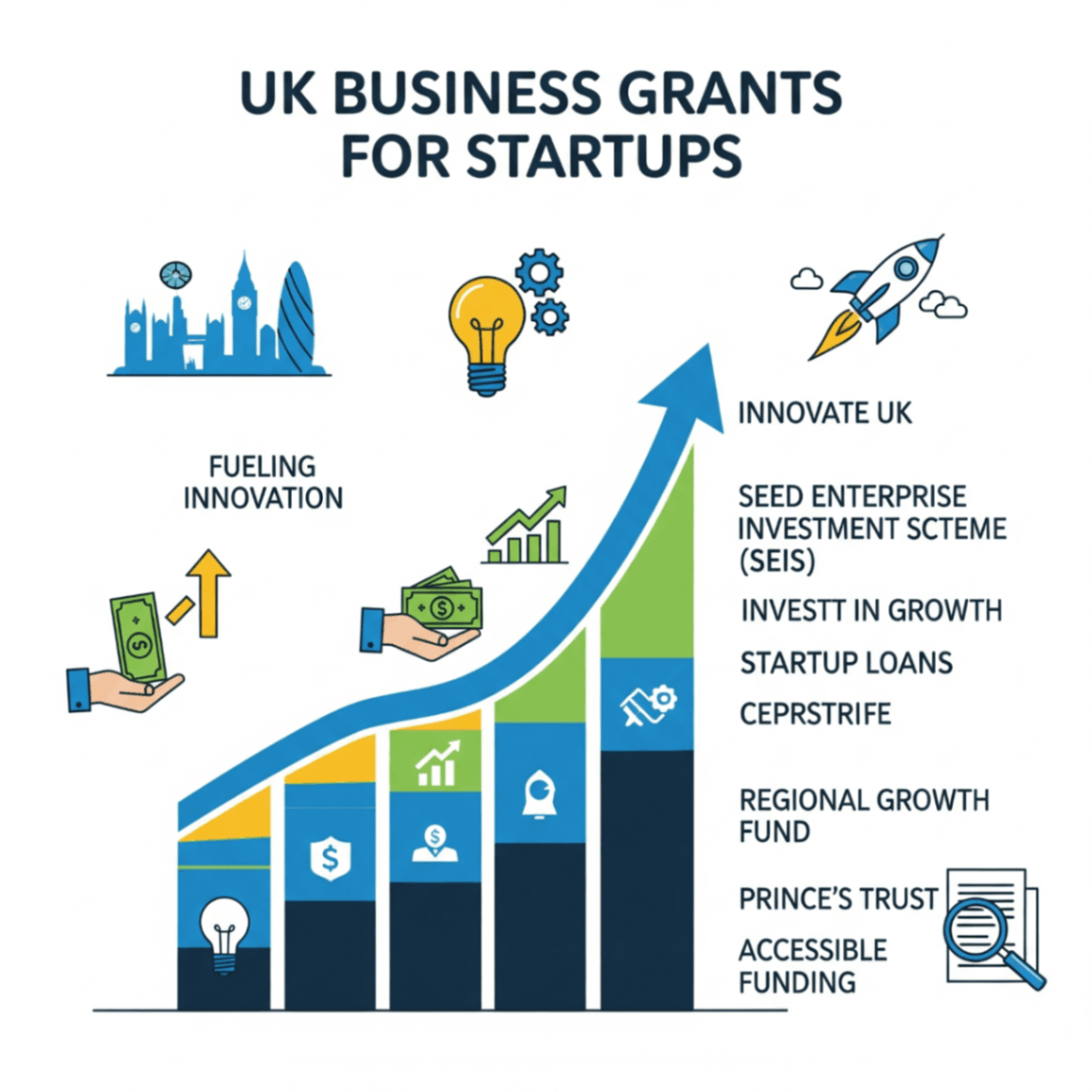
UK business grants for startups

Access to funding is one of the biggest challenges facing new businesses in Britain today. Whether you’re launching a tech startup, opening a local café, or developing a new product, understanding what UK business grants for startups are available can give you the head start you need.

These grants aren’t loans—they don’t need to be repaid. That makes them especially valuable for entrepreneurs trying to minimise risk and stretch their early budgets. However, navigating the application process and finding the right scheme can be time-consuming. That’s where this guide comes in.

In this article, you’ll learn which government and private grants are available, who can apply, and how to increase your chances of securing funding.

What Are Business Grants?

Business grants are funds awarded to entrepreneurs or companies that meet specific criteria. Unlike loans, grants do not require repayment—though they often come with terms, reporting requirements, or conditions for how the funds can be used.

Grants typically cover:

  • Equipment purchases

  • Research and development

  • Hiring and training

  • Innovation and technology adoption

  • Exporting and international trade

Benefits of Grants vs Loans

Here’s a breakdown of why grants are so attractive to early-stage businesses:

Factor Business Grant Business Loan
Repayment No Yes (with interest)
Eligibility Often project-specific Based on credit and collateral
Impact on Cash Flow No repayment burden Monthly repayments required
Flexibility May be restricted to certain uses Can be used for most business costs
Application Process Competitive and paperwork-heavy Faster but credit-driven

Types of UK Business Grants

Grants in the UK fall into several categories:

  • Innovation Grants – For R&D, technology, and science projects

  • Regional Development Grants – Specific to locations with economic need

  • Sector-Specific Grants – Tailored to industries like manufacturing, energy, or tourism

  • Employment & Training Grants – For businesses hiring or developing staff

  • Sustainability & Green Grants – Focused on environmentally friendly projects

  • Export and Trade Support – For companies expanding overseas

Top Government Grant Programmes

1. Innovate UK Smart Grants

  • Who It’s For: High-growth, tech or science-driven startups

  • Grant Size: Up to £2 million

  • Use Cases: R&D, product development, prototyping

  • Apply at: https://www.ukri.org

2. The Seed Enterprise Investment Scheme (SEIS)

  • While not a grant, SEIS helps startups attract investors by offering tax relief.

  • Good For: Startups raising capital

  • More Info: https://www.gov.uk/guidance/seis

3. Gigabit Broadband Voucher Scheme

4. Made Smarter Innovation Grant

Local and Regional Funding

Many UK regions offer specific grant schemes aimed at boosting local economies. Examples include:

Region Available Grant Provider
Scotland Scottish EDGE, DigitalBoost Grant Business Gateway
Wales Start Up Grants, Green Growth Fund Welsh Government
Northern Ireland Innovation Vouchers Invest NI
Greater Manchester Business Growth Hub Grants GM Business Growth Hub
West Midlands SME Grants for Growth West Midlands Combined Authority
Cornwall & Isles of Scilly Business Investment for Growth Fund Cornwall Council

To explore what’s available in your area, use the UK Government Finance Finder Tool.

Private and Industry-Specific Grants

Several private organisations and industry bodies offer startup grants:

1. The Prince’s Trust Enterprise Programme

2. British Fashion Council Grants

3. Arts Council England

How to Apply for a Startup Grant

The application process varies, but most grants require:

  1. Business Plan – Clear and detailed, with financials

  2. Project Description – What the grant will fund and expected impact

  3. Timeline – When the project will start and finish

  4. Budget Forecast – Breakdown of costs and funding use

  5. Company Details – Legal structure, registered number, tax status

Expect to provide evidence such as quotes, previous accounts, or letters of support.

Tips for a Successful Grant Application

  • Tailor your application to each scheme’s priorities

  • Avoid jargon: use clear language

  • Show measurable impact: job creation, environmental benefits, innovation

  • Provide realistic budgets: don’t overestimate

  • Apply early: many grants operate on a first-come, first-served basis

  • Seek advice: use local enterprise support or ask your accountant

Common Pitfalls to Avoid

  • Submitting incomplete applications

  • Missing deadlines

  • Applying for grants that your business is not eligible for

  • Not reading the terms and conditions carefully

  • Failing to keep records for reporting

Frequently Asked Questions

1. Are UK business grants taxable?

Most grants are considered taxable income. However, they may be offset by allowable business expenses. Consult HMRC or an accountant.

2. Can I apply for more than one grant?

Yes, but make sure they don’t conflict or duplicate funding. Some grants allow co-funding, while others do not.

3. Do I need to repay a grant?

No, grants are not loans. But if you misuse the funds or breach the terms, you may be required to return them.

4. Can I use a grant to pay myself a salary?

In most cases, no. Grants are usually for project expenses, not personal compensation.

5. Where can I find current UK startup grants?

Visit the Gov.uk business finance portal or check with your local Growth Hub.

Conclusion

Securing UK business grants for startups can significantly reduce the financial pressure of launching and growing your business. From tech innovation to creative arts and local economic development, there are grants available for almost every sector and stage.

By understanding the eligibility criteria, preparing a strong application, and applying early, you can increase your chances of accessing non-repayable funding that supports your vision.

Stay up to date with startup funding opportunities, tax reliefs, and business planning tips by visiting Derektime.co.uk, your trusted resource for UK entrepreneurs.

How to Register a Company in the UK

0
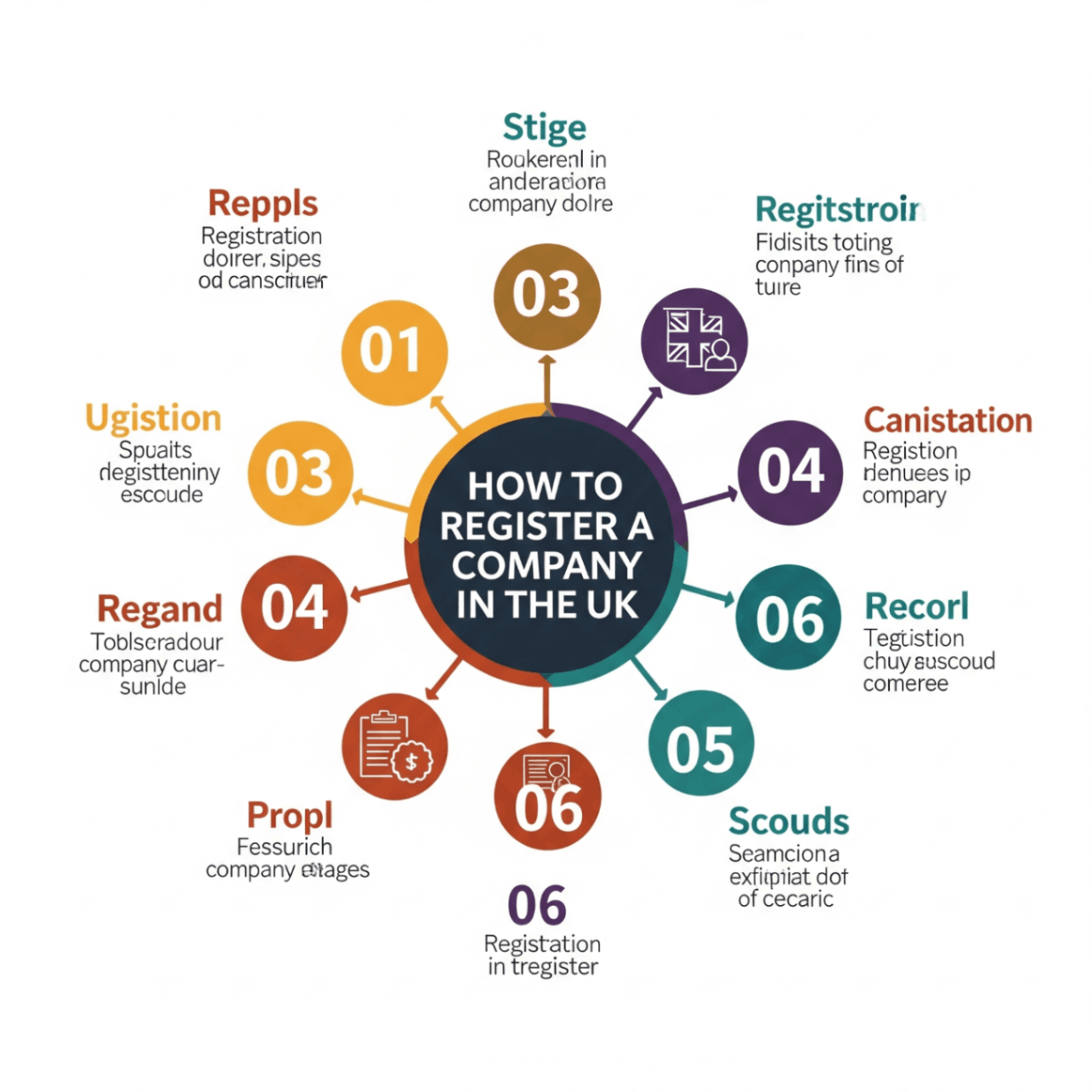
how to register a company in the UK

Setting up a business is a major milestone. Whether you’re launching a tech startup, opening a small consultancy, or starting an online shop, it’s essential to understand how to register a company in the UK the right way. Doing so ensures you meet legal obligations, protect your brand, and build trust with customers and partners from day one.

This guide breaks down the full company registration process for UK residents and international entrepreneurs. You’ll find practical steps, real-world examples, and links to government resources to help you through the process—no jargon, no fluff, just clear direction.

Why Company Registration Matters

Registering your business isn’t just a formality’s the legal step that turns your idea into a recognised entity. Here’s why it matters:

  • You gain legal protection (your business is separate from your finances).

  • You build credibility with clients, banks, and suppliers.

  • You can access tax benefits and claim business expenses.

  • You become eligible for contracts, funding, and business loans.

Failing to register properly can lead to penalties, limited access to financial tools, and reputational risks.

Types of Companies You Can Register

There are different structures for different business needs. The most common types in the UK include:

Company Type Best For Key Features
Private Limited Company (Ltd) Most UK businesses Separate legal identity, limited liability
Limited Liability Partnership (LLP) Professional services Partners share management but have limited risk
Sole Trader Freelancers or one-person operations Easiest to start, but unlimited liability
Public Limited Company (PLC) Large companies seeking investment Must have a £50,000 share capital minimum
Community Interest Company (CIC) Social enterprises Designed for businesses with community impact

Documents You Need Before Registering

Before you register, gather the following:

  • Company name: Must be unique and not offensive. Check availability using the Companies House name checker.

  • Registered office address: A UK address where official correspondence can be sent.

  • Director details: You need at least one director aged 16 or older.

  • Shareholder information: Even if you’re the only shareholder.

  • Memorandum and articles of association: These outline the company’s structure and rules.

Step-by-Step Guide to Registering a Company

You can register a company online or by post. Here’s a practical step-by-step guide to registering your business through Companies House:

Step 1: Choose Your Company Name

  • Avoid names that are too similar to existing companies.

  • You can’t use sensitive words (e.g., “Royal”) unless approved.

Step 2: Pick a Company Structure

  • Most entrepreneurs start with a Private Limited Company (Ltd).

  • Choose LLP or CIC if it fits your mission better.

Step 3: Provide a Registered Office Address

  • Must be a physical UK address. You can use a home or an accountant’s office.

Step 4: Appoint Directors and a Company Secretary (Optional)

  • At least one director is required. A company secretary is optional.

Step 5: Define Shareholders and Share Structure

  • You must issue at least one share. You can add more later.

Step 6: Create Your Memorandum and Articles of Association

  • Use standard templates provided by Companies House, or create your own.

Step 7: Register Online

Alternatively, you can register by post (Form IN01), which costs £40 and takes 8–10 days.


Costs Involved in UK Company Registration

Service Typical Cost
Online Registration (DIY) £12
Postal Registration £40
Using a Formation Agent £30–£150+
Optional Services (VAT, PAYE setup, business bank account) Varies

Keep in mind that even if the registration fee is low, you’ll also have annual responsibilities like submitting accounts and confirmation statements.

Using an Accountant or Formation Agent

Hiring a professional can save you time and help avoid errors. Consider this if:

  • You’re not confident with online forms.

  • You’re registering a complex share structure.

  • You want to set up VAT or PAYE at the same time.

Many accountants offer business formation as part of a package. Compare prices carefully and ensure they are registered with HMRC or a professional body.

Legal Compliance After Registration

Once your company is set up, you’re legally responsible for the following:

  • Confirmation Statement: Filed annually to confirm company details.

  • Annual Accounts: Even dormant companies must file accounts.

  • Corporation Tax Registration: Must be done within 3 months of starting activity.

  • PAYE Setup (if hiring staff): Register with HMRC.

  • Business Insurance: Employers’ liability insurance is required if you hire staff.

For more on staying compliant, see our UK business compliance guide.

Common Mistakes to Avoid

  • Choosing a company name without checking trademarks

  • Missing deadlines for filing annual accounts

  • Not informing HMRC about business activity

  • Failing to set up a business bank account

  • Overcomplicating the share structure unnecessarily

Avoid these pitfalls by planning properly and seeking guidance when needed.

Action Steps Before and After Registration

Before Registration:

  • Decide on the company structure

  • Choose a unique name

  • Gather required documents

  • Research responsibilities as a director

After Registration:

  • Register for Corporation Tax

  • Open a business bank account

  • Keep records of income, expenses, and decisions

  • Set reminders for filing obligations

  • Consider appointing an accountant or bookkeeper

Frequently Asked Questions

1. How long does it take to register a company in the UK?

If done online, it typically takes 24 hours. Postal applications may take up to 10 days.

2. Can non-UK residents register a UK company?

Yes. You don’t need to live in the UK, but the company must have a UK-registered office address.

3. Do I need a business bank account?

While not legally required, a separate bank account is essential for financial tracking, legal compliance, and professionalism.

4. What taxes do UK companies pay?

Companies pay Corporation Tax on profits. If you hire staff or reach the VAT threshold (£90,000), additional registrations are needed.

5. Is it better to register as a sole trader or a limited company?

It depends on your goals. Sole traders have fewer obligations but more personal risk. Limited companies offer liability protection and are often seen as more credible.

Conclusion

Learning how to register a company in the UK is a crucial first step in launching a successful business. By understanding the process, choosing the right structure, and staying compliant, you set your venture up for long-term success. Whether you register directly through Companies House or use a trusted formation agent, the goal is the same: to establish a legal foundation for growth.

For more step-by-step business guides and UK startup advice, visit Derektime.co.uk and explore our resource library tailored to small business owners and entrepreneurs.

New YouTube Rules Could Kill Creator Revenue What Changed in August 2025?

0
YouTube demonetization August 2025 update

In August 2025, YouTube introduced new policies that could have a profound impact on the revenue streams of content creators. These changes have caused a stir in the creator community, with many concerned about how the new rules will affect their earnings. The platform’s updated monetization strategies and content restrictions could result in a drastic shift for creators who rely on YouTube as their primary source of income.

In this article, we’ll delve into the key changes to YouTube’s policies in August 2025, explore how these changes could affect creator revenue, and discuss what content creators need to know to adapt to the new environment.

What Are the New YouTube Rules?

YouTube’s updated policies introduced in August 2025 focus on a few key areas that are causing concern among creators. These changes span across ad revenue sharing, content restrictions, and the platform’s approach to non-advertiser-friendly content. Here’s a breakdown of the major updates:

1. Changes in Ad Revenue Sharing

YouTube’s primary source of income for creators has always been through ad revenue sharing. However, recent changes have made it harder for creators to earn money from ads, especially for smaller channels. Here’s how:

  • Lower Ad Revenue Split for Smaller Channels: YouTube has introduced a new revenue-sharing model that reduces the percentage of ad revenue smaller creators can earn. Creators with fewer than 1,000 subscribers and 4,000 watch hours will now receive a smaller cut of ad revenue.

  • Increased Dependence on YouTube Premium: YouTube is pushing for more creators to rely on YouTube Premium subscribers for ad revenue, which will lead to fewer earnings from standard ads unless a channel gains significant traction.

This shift is seen as a way for YouTube to encourage content creators to attract higher-paying premium subscribers. However, it has left smaller creators worried about their ability to generate consistent revenue.

2. Changes to Content Restrictions and Monetization Eligibility

YouTube’s algorithm has always been a critical factor in determining which videos are eligible for monetization. However, the new rules introduced in August 2025 are tightening these restrictions even further.

  • Stricter Guidelines on Sensitive Content: YouTube has increased its restrictions on videos containing sensitive or controversial topics, such as political discussions, certain types of commentary, or explicit language. This change reduces the number of videos eligible for ads, which could directly impact the revenue of creators who focus on such topics.

  • Content Demonetization for Misinformation: There has been a stronger push from YouTube to prevent the spread of misinformation, with stricter rules on fact-checking and content moderation. Channels that do not adhere to these guidelines will face automatic demonetization, which means they can’t make money from their videos.

These stricter content guidelines have creators wondering if the platform is too censoring, making it difficult for them to discuss certain topics or generate income.

3. Impact on Super Chats and Channel Memberships

While ad revenue remains a significant source of income for creators, YouTube also provides other monetization options, including Super Chats and Channel Memberships. Unfortunately, the new August 2025 rules have affected these features as well:

  • Higher Fees for Super Chats: YouTube has increased the fees for Super Chats during live streams, meaning creators will earn less from each donation.

  • Increased Restrictions on Channel Memberships: New policies have reduced the number of channel memberships that can be granted based on the creator’s location and content type. This change has made it more difficult for creators to generate recurring income from loyal subscribers.

The new fee structure and restrictions may discourage both creators and viewers from engaging in these monetization channels.

4. Changes in YouTube’s Partner Program (YPP)

The YouTube Partner Program (YPP) has undergone significant changes, and the new August rules could make it harder for creators to qualify. Here’s what’s changed:

  • Tougher Qualification Criteria: YouTube now requires that creators have at least 2,000 subscribers and 6,000 watch hours to qualify for the Partner Program, up from the previous 1,000 subscribers and 4,000 watch hours.

  • New Application Process: The application process for YPP is now more stringent, with longer wait times for approval and higher rejection rates.

These changes are part of YouTube’s strategy to ensure that only high-quality content creators benefit from the monetization system. However, many small creators may find it difficult to meet the new criteria, thus limiting their ability to earn revenue.

5. Introduction of AI-Generated Content Restrictions

In line with the growing use of AI in content creation, YouTube has introduced new restrictions on AI-generated content. Although AI-generated content has become popular, YouTube has decided to impose certain guidelines to ensure transparency and prevent manipulation.

  • AI Content Labeling: Creators who upload AI-generated content must now include a disclosure stating that their video contains AI-generated material. Failure to comply with this requirement will result in demonetization.

  • Ban on AI-Generated Clickbait: YouTube has banned AI-generated clickbait, which can mislead viewers into clicking on videos with misleading or exaggerated titles and thumbnails. Creators who violate this rule risk facing penalties, including the removal of monetization privileges.

These new rules are aimed at curbing the spread of misleading AI content, but they could make it harder for creators who rely on AI tools to earn money on the platform.

How Will These Changes Affect Creator Revenue?

The most significant concern with the new YouTube rules is how they will impact creator revenue. For many content creators, YouTube is the primary source of income, and these changes could dramatically reduce earnings. Below are some of the ways these changes may affect creators:

1. Decreased Ad Revenue for Smaller Channels

With the new revenue-sharing model, creators who do not have a large audience may find it difficult to generate enough ad revenue to sustain their channels. The shift to a greater reliance on YouTube Premium subscribers may also affect small creators, who struggle to attract such paying users.

2. Loss of Revenue from Super Chats and Memberships

The increased fees for Super Chats and the restrictions on channel memberships could significantly reduce the income generated during live streams and from loyal subscribers. This reduction will hurt creators who rely on these monetization methods.

3. Higher Barriers to Monetization

The stricter guidelines for joining the YouTube Partner Program (YPP) and the higher qualification requirements mean that many new or smaller creators will not be able to access monetization opportunities on the platform. This makes it even harder for up-and-coming creators to turn their passion into a sustainable career.

What Should Creators Do Now?

Given these changes, creators must take action to adjust to the new YouTube rules in August 2025. Here are some steps you can take:

  • Diversify Your Revenue Streams: Relying solely on YouTube ads is no longer viable for many creators. Explore additional income sources such as sponsorships, affiliate marketing, merchandise sales, or crowdfunding platforms like Patreon.

  • Focus on High-Quality Content: The more high-quality, engaging content you produce, the better your chances are of meeting the new YPP criteria. Focus on building your audience through consistent uploads and community engagement.

  • Adapt to New Content Guidelines: Be mindful of YouTube’s new content restrictions. Avoid controversial or sensitive topics that may lead to demonetization, and ensure that your content complies with all guidelines, especially those related to misinformation and AI-generated material.

  • Explore Alternative Platforms: While YouTube remains a dominant platform, it may be worth exploring alternative platforms such as TikTok, Twitch, and Vimeo to diversify your audience and revenue streams.

Conclusion: YouTube’s New Rules and Creator Revenue in 2025

The new YouTube rules introduced in August 2025 could significantly impact creator revenue, especially for smaller and newer content creators. With stricter guidelines, changes to ad revenue sharing, and the introduction of new content restrictions, YouTube’s monetization model is shifting in ways that could make it harder for creators to earn a living. To adapt, creators will need to diversify their income sources, focus on producing high-quality content, and stay updated on the latest policy changes.

FAQs

1. What are the new monetization requirements for YouTube creators in 2025?
YouTube now requires creators to have at least 2,000 subscribers and 6,000 watch hours to qualify for the Partner Program (YPP), up from 1,000 subscribers and 4,000 watch hours.

2. How will YouTube’s changes affect small creators?
Smaller creators may struggle to meet the new YPP requirements, and reduced ad revenue and the increased fees for Super Chats and channel memberships could hurt their income.

3. Can creators still monetize AI-generated content?
Yes, but they must disclose that the content is AI-generated and avoid using AI for clickbait. Failure to comply will result in demonetization.

4. Will YouTube’s stricter content guidelines hurt creators?
Creators focusing on controversial or sensitive topics may face demonetization, which could reduce their ability to generate revenue from ads.

5. How can creators adapt to these new YouTube rules?
Creators should diversify their income streams, focus on high-quality content, comply with content guidelines, and explore alternative platforms to supplement their income.

For more insights on YouTube’s evolving monetization strategies and tips on how to thrive as a content creator, visit Derektime.

How to Get Started with Web Development Using Free Tools

0
free web development tools

Introduction

Web development is an essential skill in today’s digital world, offering endless opportunities for building websites, applications, and more. If you’re interested in starting your journey into web development, the good news is that you don’t need to spend a fortune on tools and resources. Many high-quality, free tools are available to help you learn and develop your web development skills. In this article, we’ll guide you through the steps to get started with web development using free tools, covering everything from coding languages to development environments.

Essential Free Tools for Web Development

Before diving into web development, it’s important to know which tools and technologies are commonly used. Fortunately, there is a wide range of free resources that cater to both beginners and experienced developers.

1. Code Editors

A code editor is the primary tool for writing and editing code. As a beginner, it’s essential to have an intuitive and user-friendly code editor.

  • VS Code: Visual Studio Code (VS Code) is a free, open-source code editor that is highly customizable and supports many programming languages, including HTML, CSS, and JavaScript.

    • Features: Extensions for debugging, version control (Git), syntax highlighting, and IntelliSense (auto-completion).

    • Platforms: Available on Windows, macOS, and Linux.

    • Download: VS Code

  • Sublime Text: A lightweight, fast, and customizable code editor. While the full version requires a paid license, the free version is still fully functional and widely used.

    • Features: Easy-to-use interface, code folding, multi-caret editing, and extensive package support.

    • Download: Sublime Text

  • Atom: A free, open-source code editor developed by GitHub. It’s highly customizable and features support for a wide range of languages and integrations.

    • Features: Cross-platform editing, integrated Git control, and a large library of plugins.

    • Download: Atom

Action Step: Choose one of these editors, install it, and start experimenting with small HTML, CSS, and JavaScript code snippets to get familiar with the environment.

2. Web Browsers and Developer Tools

Web browsers are essential for testing and debugging your code. All modern web browsers come with developer tools that allow you to inspect code, debug JavaScript, and analyze page performance.

  • Google Chrome Developer Tools: The most commonly used browser developer tools. Chrome’s DevTools allow you to inspect elements, run JavaScript code, and debug your website.

    • Features: Element inspector, network monitoring, performance auditing, JavaScript console, and mobile simulation.

    • Download: Google Chrome

  • Mozilla Firefox Developer Tools: Firefox offers a robust set of developer tools, similar to Chrome’s, but with some unique features like CSS Grid Inspector and advanced JavaScript debugging.

    • Features: Inspector, console, performance analysis, accessibility tools, and mobile emulation.

    • Download: Firefox Developer Edition

Action Step: Install Google Chrome or Firefox and familiarize yourself with their developer tools by inspecting elements on a website and experimenting with live code changes.

3. Version Control Systems (Git)

Git is a version control system (VCS) that helps you manage and track changes to your code. Git allows you to work collaboratively on projects and store code safely in repositories.

  • Git: Git is a free, open-source version control system. It allows you to track changes, revert to previous versions, and collaborate with others.

    • Features: Local version control, branching, merging, and support for collaborative workflows.

    • Download: Git

  • GitHub: GitHub is a platform that hosts Git repositories and enables collaboration among developers. While Git is used locally on your computer, GitHub allows you to share your projects online.

    • Features: Git repository hosting, collaboration tools, issue tracking, pull requests, and continuous integration.

    • Sign up: GitHub

Action Step: Install Git and create a free GitHub account. Start learning how to create repositories, commit changes, and push your code to GitHub.

4. Local Development Environments

A local development environment allows you to build and test websites on your computer before publishing them online. Setting up a local environment is essential for web development.

  • XAMPP: XAMPP is a free and open-source cross-platform web server solution. It includes Apache, MySQL, PHP, and Perl, and is perfect for testing dynamic websites locally.

    • Features: Easy installation, local server environment, database management (MySQL).

    • Download: XAMPP

  • MAMP: Similar to XAMPP, MAMP is a local server environment for macOS and Windows, useful for testing PHP-based applications.

    • Features: Local server with Apache and MySQL, simple setup.

    • Download: MAMP

Action Step: Install XAMPP or MAMP and use it to run your local website development environment.

Learning Resources for Web Development

In addition to the tools mentioned above, there are numerous free resources available to help you learn web development.

1. Online Coding Courses

  • freeCodeCamp: A popular platform offering free web development tutorials. It covers topics like HTML, CSS, JavaScript, and more advanced frameworks.

  • MDN Web Docs: Maintained by Mozilla, this resource provides detailed documentation and tutorials for web development technologies like HTML, CSS, and JavaScript.

  • Codecademy: Offers free coding lessons in web development, including interactive exercises in HTML, CSS, JavaScript, and more.

2. Communities and Forums

Joining communities can help you learn faster, as you can ask questions, share your work, and get feedback from others.

  • Stack Overflow: A community of developers where you can ask questions, get answers, and learn from others.

  • Reddit: Subreddits like r/webdev and r/learnprogramming are great places to connect with other learners and developers.

Steps to Start Building Websites Using Free Tools

Now that you’re equipped with the necessary tools, it’s time to start building websites. Follow these steps to get started:

  1. Set Up Your Development Environment: Install a code editor (like VS Code) and a local development server (like XAMPP or MAMP).

  2. Learn HTML & CSS: Start with the basics of HTML for structuring web pages and CSS for styling.

  3. Practice JavaScript: Learn JavaScript to add interactivity to your websites.

  4. Use Git & GitHub: Begin version control by creating repositories and pushing your code to GitHub.

  5. Build Projects: Start building small projects to practice and demonstrate your skills. Consider building a personal portfolio or a simple blog.

  6. Learn Responsive Design: Make your websites mobile-friendly using responsive design techniques with CSS.

Conclusion

Web development is an exciting field, and with the help of free tools, anyone can get started on the path to becoming a skilled developer. By using resources like free code editors, GitHub, and local development environments, along with online tutorials and communities, you can begin building websites and applications with ease. The key is consistency and practice. Start small, experiment, and gradually take on more complex projects. As you learn, you’ll find that web development offers endless possibilities for creativity and problem-solving.

FAQ

1. Do I need to pay for web development tools?

  • No, there are many free tools available, such as VS Code, GitHub, XAMPP, and freeCodeCamp, that can help you get started with web development at no cost.

2. What is the best code editor for beginners?

  • Visual Studio Code (VS Code) is a great choice for beginners due to its ease of use, wide range of extensions, and active community.

3. How long does it take to learn web development?

  • The time it takes to learn web development varies depending on your pace and the resources you use. A few months of consistent practice can help you build a solid foundation.

4. How can I start building projects as a beginner?

  • Start by building simple websites, such as a personal portfolio or a landing page. Use online tutorials and resources to guide you through the process.

5. Is it necessary to learn Git for web development?

  • Yes, learning Git is important for version control, collaboration, and tracking changes in your code. It’s an essential skill for modern web developers.

By following these steps and utilizing free tools and resources, you can embark on your web development journey without spending a lot of money. With dedication and consistent practice, you’ll be well on your way to becoming a proficient web developer.

How to Secure Your Data with Free Encryption Software

0
free encryption software

Introduction

In today’s digital world, securing your data has become more important than ever. With an increasing number of cyber threats, data breaches, and privacy concerns, encryption is one of the most effective ways to protect your sensitive information. While premium encryption software can be costly, there are several reliable free encryption tools available that can help secure your data. In this article, we will explore how to secure your data with free encryption software, the different types of encryption methods, and how you can implement them to safeguard your personal or business information.

Understanding Encryption and Its Importance

Encryption is the process of converting information into a code to prevent unauthorized access. By encrypting your data, you ensure that even if someone intercepts it, they will not be able to read or use it without the decryption key.

Key Benefits of Encryption:

  • Data Protection: Prevents unauthorized access to sensitive information.

  • Privacy: Safeguards personal and financial details from hackers.

  • Compliance: Many industries require encryption to comply with regulations like GDPR, HIPAA, and PCI-DSS.

  • Peace of Mind: Ensures that even if your devices are lost or stolen, your data remains secure.

Types of Encryption Methods

When choosing free encryption software, it’s important to understand the different types of encryption methods available. The two most common types are:

1. Symmetric Encryption

  • Definition: Uses the same key for both encryption and decryption.

  • Pros: Fast and efficient.

  • Cons: If the key is compromised, the entire system is at risk.

2. Asymmetric Encryption

  • Definition: Uses a pair of keys – a public key to encrypt data and a private key to decrypt it.

  • Pros: More secure, as only the private key can decrypt the information.

  • Cons: Slower than symmetric encryption due to more complex processes.

How to Secure Your Data with Free Encryption Software

Several free encryption tools are available that can help protect your data without breaking the bank. These tools vary in features, ease of use, and security, so it’s essential to choose the right one for your needs.

1. VeraCrypt

VeraCrypt is one of the most well-known and trusted free encryption tools. It allows users to create encrypted volumes and secure entire disks or partitions. VeraCrypt uses strong encryption algorithms like AES, Serpent, and Twofish, ensuring robust protection for your data.

  • Features:

    • Strong encryption algorithms (AES, Serpent, Twofish).

    • Supports creating encrypted volumes and whole disk encryption.

    • Open-source and free to use.

    • Allows for hidden volumes for extra security.

  • How It Works:

    • Install VeraCrypt.

    • Create a new volume or encrypt an existing disk/partition.

    • Choose an encryption algorithm and password.

    • Mount the encrypted volume and store your data in it.

Action Step: Download VeraCrypt from its official website, follow the setup instructions, and start encrypting your sensitive files.

2. BitLocker (Windows)

BitLocker is a built-in encryption tool available in Windows 10 and later versions. It allows users to encrypt their entire hard drive or specific files, ensuring data security at rest.

  • Features:

    • Full disk encryption.

    • Integration with Windows makes it easy to set up.

    • Uses AES encryption with a 128-bit or 256-bit key.

    • Ideal for business environments.

  • How It Works:

    • Go to “Control Panel” > “BitLocker Drive Encryption”.

    • Select the drive you want to encrypt.

    • Set a strong password or PIN for encryption.

    • BitLocker will encrypt the drive in the background.

Action Step: Enable BitLocker on your Windows machine to protect your files and folders, especially if you store sensitive data.

3. 7-Zip

7-Zip is a free, open-source file archiver that also offers strong file encryption. While not a full disk encryption tool, it allows you to encrypt individual files and compress them into an encrypted archive.

  • Features:

    • AES-256 encryption for file compression.

    • Open-source and free.

    • Supports a variety of file formats.

    • Simple to use and lightweight.

  • How It Works:

    • Install 7-Zip.

    • Right-click the file or folder you want to encrypt.

    • Select “Add to archive” and choose “7z” format.

    • Set a password and enable AES-256 encryption.

    • Compress and encrypt the file.

Action Step: Use 7-Zip to securely encrypt individual files before sharing or storing them in cloud storage.

4. Cryptomator

Cryptomator is a free and open-source encryption software designed specifically for securing cloud storage data. It allows users to encrypt files locally before uploading them to cloud storage services like Google Drive or Dropbox.

  • Features:

    • Cloud-specific encryption.

    • AES-256 encryption.

    • Easy integration with cloud storage services.

    • Open-source and free.

  • How It Works:

    • Download and install Cryptomator.

    • Create a new vault in Cryptomator.

    • Drag files into the vault, and Cryptomator will encrypt them automatically.

    • Sync the vault with your cloud storage.

Action Step: Secure your cloud-stored data with Cryptomator, ensuring your files are encrypted before uploading them to your cloud provider.

Comparing Free Encryption Software Tools

Feature VeraCrypt BitLocker 7-Zip Cryptomator
Encryption Type AES, Serpent, Twofish AES 128/256-bit AES-256 AES-256
Platform Windows, macOS, Linux Windows (Pro & Enterprise) Windows, macOS, Linux Windows, macOS, Linux
Full Disk Encryption Yes Yes No No
File Encryption Yes Yes (via BitLocker To Go) Yes Yes
Cloud Storage Support No No No Yes
Free Version Yes Yes (with Windows license) Yes Yes
  1. Identify Your Needs: Determine whether you need full disk encryption, file-specific encryption, or cloud storage encryption. Choose a tool based on these needs.

  2. Select an Encryption Tool: Depending on your platform and encryption requirements, choose from VeraCrypt, BitLocker, 7-Zip, or Cryptomator.

  3. Set Strong Passwords: Always use strong, unique passwords for your encrypted files or drives. Avoid using easily guessable passwords.

  4. Regularly Back up Encrypted Files: Back up your encrypted files to an external drive or cloud service, ensuring that the backup is also encrypted.

  5. Stay Updated: Keep your encryption software up to date to protect against vulnerabilities.

Conclusion

Securing your data with encryption is crucial in today’s digital age. With the availability of free encryption software such as VeraCrypt, BitLocker, 7-Zip, and Cryptomator, protecting your sensitive information has never been more accessible. Whether you need full disk encryption, file-specific encryption, or cloud storage protection, these tools offer powerful solutions to safeguard your data. By implementing strong encryption practices, you can protect your personal information and business data from cyber threats and ensure compliance with privacy regulations.

FAQ

1. What is the difference between full disk encryption and file encryption?

  • Full disk encryption secures the entire disk, including the operating system and all files. File encryption, on the other hand, only encrypts specific files or folders.

2. Is it safe to use free encryption software?

  • Yes, free encryption software like VeraCrypt and Cryptomator is open-source and widely trusted for its security features. However, ensure you download them from official sources to avoid malware.

3. Can BitLocker be used on all versions of Windows?

  • BitLocker is available on Windows 10 Pro and Enterprise versions. It is not available on Windows Home.

4. How do I create a strong password for encryption?

  • Use a mix of uppercase and lowercase letters, numbers, and special characters. Avoid common words or phrases and aim for at least 12 characters.

5. Can I encrypt files stored in the cloud?

  • Yes, Cryptomator allows you to encrypt files before uploading them to cloud storage, ensuring that your files remain secure.

By following the outlined steps and utilizing free encryption software, you can significantly improve the security of your data, ensuring that your personal and business information is protected against unauthorized access.

The Role of Chatbots in Enhancing Customer Experience and Digital Marketing

0
hatbots in marketing

Introduction

In recent years, chatbots have emerged as a powerful tool for enhancing customer experience and optimizing digital marketing strategies. By providing immediate, personalized support and automating routine tasks, chatbots have become indispensable assets for businesses striving to improve customer engagement, boost efficiency, and drive conversions. In this article, we will explore the role of chatbots in digital marketing, their impact on customer experience, and how businesses can leverage this technology to stay competitive in the rapidly evolving digital landscape.

What Are Chatbots?

A chatbot is an AI-powered tool designed to simulate human conversation. Through text or voice interactions, chatbots can provide real-time customer support, answer inquiries, assist with tasks, and even help drive sales. Chatbots operate on various messaging platforms, such as websites, mobile apps, and social media, making them accessible across multiple channels.

Key Types of Chatbots:

  • Rule-Based Chatbots: Follow predefined rules to respond to specific queries and provide scripted responses.

  • AI-Powered Chatbots: Use machine learning and natural language processing (NLP) to understand context, learn from interactions, and offer more personalized responses.

The Role of Chatbots in Enhancing Customer Experience

Customer experience is a critical factor in today’s competitive business environment. Chatbots play a pivotal role in creating seamless and efficient customer interactions that can lead to higher satisfaction, loyalty, and retention.

1. Instant Customer Support

One of the primary advantages of chatbots is their ability to provide instant support to customers. In the digital age, customers expect quick responses to their queries, and chatbots deliver that by operating 24/7.

  • Availability: Chatbots are available around the clock, ensuring that customers can get assistance at any time, even outside regular business hours.

  • Quick Responses: Chatbots can instantly provide answers to frequently asked questions, reducing wait times and improving customer satisfaction.

  • Scalability: Chatbots can handle multiple customer interactions simultaneously, preventing long queues and bottlenecks.

Action Step: Implement a chatbot solution on your website or app that offers instant support for common customer inquiries.

2. Personalized Customer Interactions

AI-powered chatbots are capable of analyzing customer data to deliver personalized interactions. By leveraging past interactions, preferences, and browsing history, chatbots can tailor responses and recommendations, making the customer experience more relevant and engaging.

  • Customized Recommendations: Chatbots can suggest products or services based on the user’s browsing behavior and preferences.

  • Behavioral Tracking: Chatbots can track user behavior across sessions and use that data to refine future interactions.

  • Dynamic Responses: Unlike rule-based chatbots, AI-powered chatbots can adjust their tone and responses to fit the context of the conversation, providing a more human-like experience.

Action Step: Use customer data to train your chatbot and enable it to offer personalized recommendations, enhancing the customer experience.

3. Lead Generation and Qualification

Chatbots can assist in the lead generation process by engaging with website visitors and gathering valuable information. Through intelligent questioning, chatbots can qualify leads and pass the most promising ones on to the sales team.

  • Proactive Engagement: Chatbots can reach out to visitors who are browsing your website, offering assistance or guiding them to relevant products.

  • Data Collection: Chatbots can ask qualifying questions to gather information about a lead’s needs, helping your sales team prioritize the most relevant prospects.

  • Automated Follow-Ups: After engaging with a lead, chatbots can automatically send follow-up messages or emails to nurture the relationship.

Action Step: Integrate chatbots into your lead generation process, using them to qualify leads and pass relevant information to your sales team.

4. Seamless Integration with Omnichannel Marketing

In 2025, customers interact with brands across multiple channels, including websites, social media, and messaging platforms. Chatbots can integrate with these channels to provide a consistent, omnichannel experience.

  • Cross-Platform Communication: Chatbots can engage customers on platforms like Facebook Messenger, WhatsApp, and even SMS, ensuring that support is available across all channels.

  • Consistent Experience: By using the same chatbot across multiple touchpoints, businesses can ensure that the customer experience remains consistent, no matter where the interaction occurs.

Action Step: Deploy chatbots across various platforms to create a unified, omnichannel customer experience that meets your audience where they are.

The Role of Chatbots in Digital Marketing

Chatbots are not only beneficial for customer service but also play an essential role in enhancing digital marketing strategies. From driving conversions to automating routine marketing tasks, chatbots are helping marketers optimize their campaigns and improve ROI.

1. Automated Marketing Campaigns

Chatbots can automate a wide range of marketing tasks, including sending personalized messages, conducting surveys, and nurturing leads. By integrating with your CRM and marketing tools, chatbots can automate follow-ups, remind customers about abandoned carts, or promote special offers.

  • Automated Email Marketing: Chatbots can trigger personalized email campaigns based on user behavior, such as abandoned cart reminders or post-purchase follow-ups.

  • Engagement Through Messaging: Chatbots can send personalized messages via messaging apps or social media platforms, keeping customers engaged with targeted content.

  • Survey and Feedback Collection: Chatbots can automatically gather feedback from customers, providing valuable insights that can be used to improve future marketing efforts.

Action Step: Set up automated campaigns that leverage chatbot functionality to send personalized messages and follow-ups based on customer behavior.

2. Enhanced Customer Segmentation

Chatbots gather data from customer interactions, which can be used to segment your audience more effectively. By analyzing user preferences and behavior, chatbots can help you target specific segments with tailored marketing messages.

  • Behavioral Segmentation: Chatbots track customer behavior, such as product preferences, purchase history, and engagement patterns, to create detailed customer profiles.

  • Dynamic Content Delivery: With this data, chatbots can deliver content that speaks directly to the needs of different audience segments, improving conversion rates.

Action Step: Use the data collected by your chatbot to refine your audience segmentation and deliver highly targeted marketing campaigns.

3. Improved Conversion Rates

By streamlining the customer journey and providing instant assistance, chatbots can significantly improve conversion rates. Whether it’s answering questions, guiding customers through the sales funnel, or assisting with purchases, chatbots help move leads from curiosity to conversion.

  • Instant Support: Chatbots can answer questions in real-time, addressing concerns that may cause hesitation in making a purchase.

  • Guided Shopping Experience: Chatbots can recommend products based on the customer’s preferences and behavior, making it easier for them to find what they are looking for.

  • Abandoned Cart Recovery: Chatbots can reach out to customers who abandon their carts, reminding them to complete their purchase with targeted messages or discounts.

Action Step: Implement chatbot-driven solutions that assist with cart abandonment and lead nurturing to drive higher conversion rates.

The Future of Chatbots in Customer Experience and Digital Marketing

As technology continues to evolve, the capabilities of chatbots are expected to expand. In 2025, chatbots will be more intelligent, more integrated with other technologies, and more capable of providing a seamless customer experience.

Trends to Watch:

  • Voice-Activated Chatbots: With the rise of voice assistants, chatbots will increasingly integrate with voice-activated platforms, allowing customers to interact with brands via voice commands.

  • AI-Powered Conversations: As AI technology advances, chatbots will become even more sophisticated in understanding and predicting customer needs, providing more human-like interactions.

  • Integrated Shopping Experiences: Chatbots will play a larger role in social commerce, enabling customers to shop directly through messaging platforms and social media.

Action Step: Stay ahead of the curve by investing in AI-driven chatbot technology that integrates voice, enhances personalization, and supports e-commerce directly through social channels.

Conclusion

Chatbots are revolutionizing customer experience and digital marketing in 2025. By offering personalized interactions, automating routine tasks, and integrating with omnichannel marketing strategies, chatbots are transforming the way businesses engage with customers. Their role in enhancing customer support, lead generation, and marketing efficiency makes them invaluable assets for any modern business. As chatbot technology continues to evolve, businesses must embrace these innovations to stay competitive in the ever-changing digital landscape.

FAQ

1. How do chatbots enhance customer experience?

  • Chatbots improve customer experience by providing instant support, personalized interactions, and consistent engagement across various channels.

2. Can chatbots improve lead generation?

  • Yes, chatbots can engage website visitors, qualify leads, and gather valuable information to pass on to sales teams, improving lead generation.

3. How can chatbots boost conversion rates?

  • Chatbots can answer customer queries in real-time, guide customers through the buying process, and recover abandoned carts, resulting in higher conversion rates.

4. What role do chatbots play in digital marketing?

  • Chatbots automate marketing tasks such as email campaigns, personalized messaging, and customer segmentation, improving marketing efficiency and targeting.

5. Will chatbots become more advanced in the future?

  • Yes, chatbots are expected to become more intelligent, integrating with AI and voice technologies, offering even more personalized and human-like interactions.

By adopting chatbots, businesses can enhance their customer experience, streamline marketing efforts, and boost operational efficiency, positioning themselves for success in 2025 and beyond.