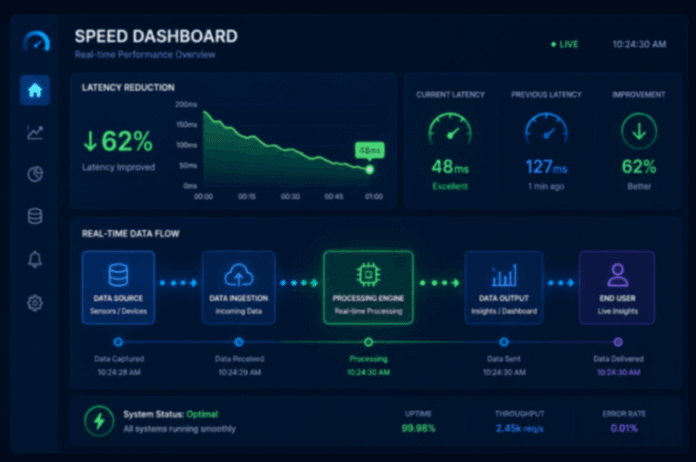
Quick Answer: Arena messaging is the technology behind large, shared, real-time chat rooms — the kind you see during live sports commentary, product launches, or big community events. Its real edge isn’t the chat box itself. It’s the hidden layer of AI moderation, visitor tracking, and automated routing running quietly underneath every message you send.
Table of Contents
- Quick Overview: What Arena Messaging Actually Does
- What People Mean by Arena Messaging
- The Layer You Don’t See
- Handling a Crowd Without Falling Over
- The Data Question
- Bots Doing the Boring Work
- Security Nobody Talks About
- Where You’ve Probably Already Used It
- So, Is There Really a Secret Edge?
- Quick Questions
- Final Word
- Related Reading
Quick Overview: What Arena Messaging Actually Does
Picture a stadium during a big match. Thousands of people shout at once, yet you can still pick out the vendor calling ticket numbers over the noise. Arena messaging works on a similar idea, except the crowd is online and the noise is text.
Step 1. A message enters the system the second someone hits send. Instead of going to one private inbox, it drops into a shared stream that everyone in that “arena” — a live chat room, an event feed, a community board — can see almost instantly.
Step 2. A filtering layer checks the message before it becomes fully visible. This step catches spam, banned links, slurs, and repeated flooding, usually in a fraction of a second, so the room still feels live rather than delayed.
Step 3. The system tags the message with metadata — who sent it, when, and sometimes what topic it touches. This tagging is what lets a platform later report that most of the chat during a match focused on a referee’s call.
Step 4. When a room gets busy — say, a product launch with fifty thousand people typing at once — the infrastructure spreads that load across multiple servers so the chat doesn’t lag behind the live video.
Step 5. Some messages are pulled from the public feed entirely and routed to a human moderator, a support agent, or a bot. A refund question during a shopping stream, for example, quietly leaves the Arena and lands in a support queue instead.
Step 6. Everything gets logged. Businesses use these logs to measure engagement, spot patterns, and, in many cases, turn anonymous chatter into identified contacts for later marketing.
None of these steps looks dramatic on its own. Put together, they explain why arena messaging feels effortless to the person typing and genuinely complicated to the team running it.
What People Mean by Arena Messaging
Arena messaging isn’t one single app, the way WhatsApp or iMessage is. It’s closer to a category — a label for platforms built around shared, high-traffic conversations rather than private one-to-one texting. A live chat sidebar next to a football stream, the comment feed under a breaking news story, a community board inside a mobile app, even the messaging tab on a trading-card marketplace — all of these lean on similar plumbing underneath.
What separates arena-style messaging from an ordinary group chat is scale and structure. A family group chat might hold a dozen people. An arena messaging room during a championship final can hold hundreds of thousands of people, all posting into the same window, with moderation and routing running in the background to keep it from turning into pure noise.
Disclaimer: This article describes arena messaging as a general category of real-time, high-volume chat technology. It is not a review of, or a claim about, any single named company, app, or vendor. Features, pricing, and technical details vary between providers, so check a specific platform’s own documentation before making a decision based on anything written here.
The Layer You Don’t See
Here’s where the “secret edge” part actually starts to make sense. Most people open a live chat, type a comment, and move on. They never see what happens between hitting send and the message showing up on screen.
In that half-second gap, a few things are usually happening at once. A content filter scores the message for spam or abuse. A routing rule decides whether it belongs in the public feed or a private queue. And on a fair number of platforms, a visitor-identification step tries to connect that anonymous username with an email, a login, or a past visit — quietly turning a casual commenter into a named contact in someone’s marketing database.
None of this is hidden in a sinister way. It’s usually written somewhere in a privacy policy that almost nobody reads all the way through. But it’s easy to miss, and it’s the part that actually gives Arena messaging its edge over a plain comment box: the platform isn’t just carrying your words, it’s learning from them.
Pro Tip: Before joining a large arena-style chat room during a live event, check the platform’s privacy or account settings first. Many let you post under a display name without linking your real identity — worth doing if you’d rather comment on the game without ending up on a company’s contact list afterward.
Handling a Crowd Without Falling Over
Anyone who has watched a live chat freeze mid-match already understands why this matters. A comment section built for a few hundred visitors a day can collapse the moment fifty thousand people show up at once for a season finale or a product drop.
Arena messaging systems are built around that spike, not around an average day. Servers scale up automatically as traffic climbs, messages get grouped and delivered in small batches instead of one at a time, and persistent connection methods keep the feed updating live instead of forcing the page to reload. It’s less about handling more messages and more about surviving the worst five minutes of the year without anyone noticing a slowdown.
This is also why arena messaging tends to cost more to run than it appears to be from the outside. A small support inbox doesn’t need this kind of engineering. A live chat room during a major final does.
The Data Question
Every message typed into an arena chat becomes a data point somewhere. Timestamps, device type, rough location, sentiment, and topic tags all get recorded, usually within seconds of the message going out.
Businesses use this in fairly ordinary ways — figuring out which part of a live stream lost people’s attention or which product question came up most often during a launch. Support teams use the same data to build faster replies to frequently asked questions, cutting down the time an agent spends typing the same answer for the hundredth time that week.
The important point is that this kind of data collection is standard practice, not an exception. If a platform lets thousands of strangers talk in real time for free, message data is usually part of how that free experience gets paid for — through better targeting, lead generation, or product decisions shaped by what people actually said in the chat.
Personal Experience: During a live shopping event last year, I typed a sizing question into the chat and got an automated reply with a size chart in under ten seconds, followed by a real agent confirming stock about five minutes later. At the time it felt like a lucky coincidence. Looking at how these systems actually route and tag messages, it wasn’t luck at all — it was the routing layer doing exactly what it was built to do.
Bots Doing the Boring Work
A large share of what appears to be human attention in an arena chat is automation. Shipping questions, return policies, size charts, event schedules — these repeat so often that most platforms hand them to a bot before a person ever sees them.
The better systems don’t answer with a flat script. They pull live data — an actual tracking number, an actual stock count — so the reply feels specific instead of canned. When a bot can’t handle a question, it hands the conversation off to a human agent with the full history already attached, so the customer isn’t asked to repeat themselves from scratch.
This is the least glamorous part of arena messaging and probably the part carrying the most weight. Nobody talks about the bot that quietly answered 80 repeat questions during a two-hour live stream, but it was usually the reason the support team didn’t drown that day.
Security Nobody Talks About
Public, high-traffic chat rooms are an obvious target for spam bots, scrapers, and people trying to slip phishing links past moderators. Arena messaging platforms typically encrypt data in transit, rate-limit accounts that post too fast, and automatically block known bad links before they ever reach the feed.
None of this is visible unless it fails. People notice Arena messaging when one scam link slips through, not when a thousand scam links get caught before anyone sees them. That imbalance is a big part of why the security work behind these platforms goes unnoticed — it gets judged by its failures, never by its successes.
Expert Opinion: Analysts who study live-event platforms tend to agree on one point: the real value of arena messaging isn’t the chat feature itself, it’s the behavioral data it generates. A comment window is cheap to build. A system that reliably filters, tags, and routes millions of comments during a live spike is not — and that gap is where most of the actual investment goes.
Where You’ve Probably Already Used It
Arena messaging shows up more often than the name suggests. Live comment sections under a breaking news article, the chat sidebar during a sports broadcast, the group discussion inside a marketplace app, community boards inside a gaming platform, and the messaging tab tied to a live shopping stream all run some version of it.
Most people never think of these as the same category of technology. A football chat feels nothing like a marketplace inbox on the surface. Underneath, both are solving the same problem — keeping a large, fast-moving public conversation readable, safe, and useful to the business that runs it.
So, Is There Really a Secret Edge?
Not in the way the phrase suggests. There’s no single trick that arena messaging platforms are all hiding from their users. What actually exists is a stack of ordinary decisions — moderation rules, routing logic, identification steps, scaling infrastructure — that most people never think to ask about, because the chat box on the surface looks so simple.
That’s really the edge: not secrecy, but distance. The gap between what a message looks like when you type it and everything that happens to it before it becomes visible to a stadium’s worth of strangers. Understanding that gap doesn’t make Arena messaging less useful. If anything, it explains why a free live chat during a major event can feel so smooth, and why building one that actually holds up under pressure is harder than it looks from a user’s chair.
Quick Questions
Is Arena messaging the same as a group chat app? No. Apps like WhatsApp are built for small, private conversations. Arena messaging is built for large, mostly public rooms with moderation and routing layered underneath.
Does Arena messaging store what I type? Usually, yes, at least temporarily, for moderation, analytics, or support handoffs. Check the specific platform’s privacy policy for exact retention details.
Can Arena messaging handle sudden traffic spikes? That’s its main design goal. These systems are built to scale up during a live event rather than remain at a single traffic level all day.
Final Word
Arena messaging earns its reputation the moment it fails — a laggy feed, a missed scam link, a bot that answers the wrong question. The rest of the time, it just works, and that’s exactly why so few people stop to ask what’s running underneath it. The next time a live chat keeps up with fifty thousand strangers typing at once without falling over, that’s not luck. That’s the Arena doing what it was built to do.
Related Reading
- How Live Chat Is Changing the Way Websites Keep Visitors
- Community Chat Tools Compared: What Actually Scales
- Why Real-Time Support Chat Cuts Response Time
(Replace these with your own site’s actual URLs before publishing.)

Founder & Lead Writer, Derek Time
Derek covers technology, business, entertainment, and digital trends for Derek Time, focusing on making complex topics clear and practical. Outside of writing, he’s usually testing new apps or keeping an eye on what’s next in tech and business.